
India’s ambitious infrastructure overhaul is dramatically slashing travel times across the country, making journeys between major cities significantly shorter. The Delhi-Mumbai Expressway, once completed, will reduce travel from 33 hours to just 12, transforming long-haul commutes into more manageable drives for millions of travelers.
These expressways are part of a broader strategy to enhance connectivity. The Delhi-Meerut Expressway now allows travelers to reach their destination in just 50 minutes, down from 2.5 hours. Similarly, the Bengaluru-Mysuru Expressway has cut the travel time to 75 minutes from nearly three hours. The Delhi-Dehradun Economic Corridor has also seen a substantial reduction, bringing down the journey from over six hours to approximately 2.5 hours.
In addition to expressways, bridges and tunnels are playing a pivotal role in improving regional accessibility. In the Northeast, the Bhupen Hazarika Setu has cut travel time in Assam and Arunachal Pradesh from six hours to just one. Meanwhile, the Bogibeel Bridge and the Kosi Rail Mahasetu in Bihar have also contributed to reducing travel durations significantly, with the latter slashing rail travel time from eight hours to 30 minutes.
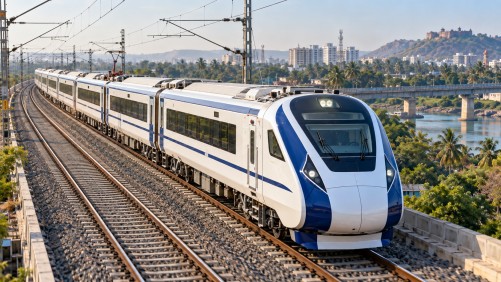
Modern rail services, including the Vande Bharat trains, further enhance India’s connectivity. The New Delhi-Varanasi Vande Bharat service completes its journey in around eight hours, and the Katra-Srinagar service now takes just three hours. These improvements align with a broader railway timetable overhaul set for 2026, which aims to speed up 549 trains, achieving over 30 minutes in travel-time savings for numerous services.
Looking towards the future, the Mumbai-Ahmedabad High-Speed Rail Corridor promises to revolutionize travel between these two economic hubs. Scheduled for completion by August 2027, this bullet train project will reduce the journey to about 1 hour and 58 minutes, a significant improvement over the current eight to nine hours by road. With speeds reaching up to 320 kmph, this corridor includes 12 stations and features a unique 7-km undersea tunnel beneath Thane Creek.