
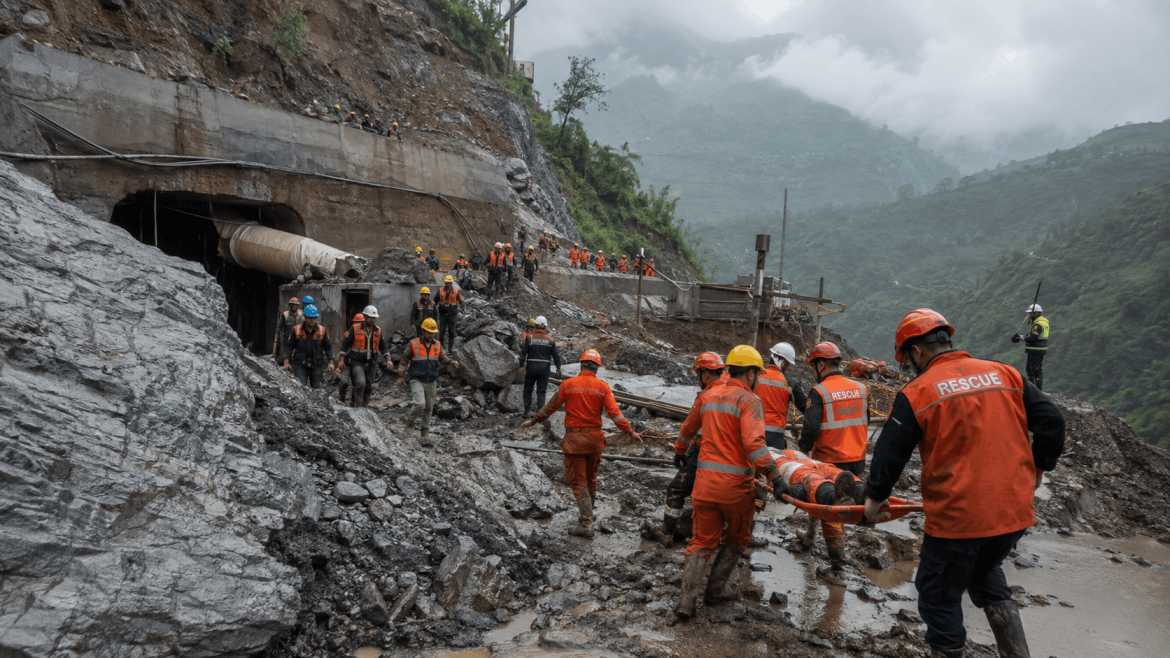
In a desperate bid to reach over 900 hydropower workers feared trapped in Nepal, rescue teams are navigating the aftermath of devastating flash floods that hit the region last week. The catastrophic event has already claimed nearly 940 lives in Nepal, with further casualties reported in Tibet, and thousands more missing on both sides of the border. Among the missing, approximately 500 workers are believed to be stuck in tunnels at hydropower sites in the heavily impacted Rasuwa and Nuwakot districts. Deteriorating oxygen levels in these tunnels significantly diminish the likelihood of finding survivors, as reported by experts. Survivors who managed to escape the initial flooding recounted the harrowing moments when many of their colleagues were left behind.
The rescue mission is confronting significant challenges, including collapsed bridges, unpredictable river surges, and rugged terrain, which have necessitated heavy reliance on helicopters. Efforts are further supported by neighboring countries sending temporary bridge equipment to restore accessibility. Meanwhile, extensive debris has obstructed tunnel entrances, prompting the use of blasting operations at some locations to reach those trapped inside. The disaster has also severely impacted Nepal’s power generation capability, exacerbating the crisis. Inside the flooded tunnels, rescuers face perilous conditions, with mud reaching chest level in some areas and visibility notably impaired. Despite these grim circumstances, some rescuers hold a cautious hope that certain safe zones within the tunnels might have enabled some workers to survive.
The widespread disaster has devastated tens of thousands, obliterating entire communities and sparking renewed concerns about the impact of climate change on glacial and mountainous regions. Nepal’s leadership has described this as an unprecedented natural disaster. In response, tens of thousands of security personnel and volunteers have mobilized to aid in the rescue and recovery efforts. The international community has responded robustly, offering specialized rescue teams, financial aid, and technical support from neighboring countries, underscoring the crisis’s magnitude. Amidst the destruction, a glimmer of hope emerged when rescuers pulled a young child alive from the mud.
While the immediate focus remains on the rescue efforts, concerns are also mounting regarding the exchange of glacier and water-level data between neighboring countries. Officials worry that inadequate information-sharing could hamper future disaster preparedness in the region. As rescue operations continue under these challenging conditions, the situation underscores the urgent need for enhanced collaboration and data transparency to mitigate the impacts of such natural calamities in the future.