
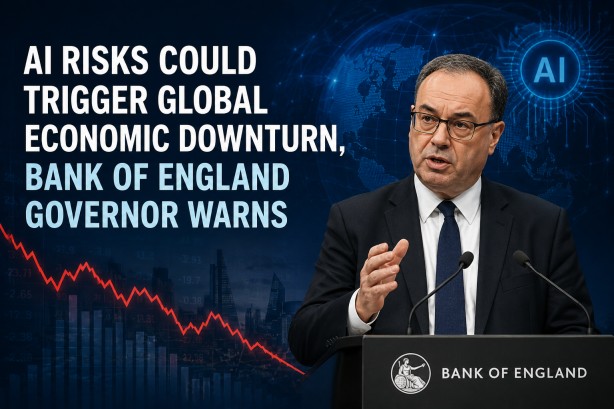
Bank of England Governor Andrew Bailey has raised alarms over the potential threats that advanced artificial intelligence (AI) systems could pose to the global financial landscape. In a communication sent to G20 finance ministers and central bank governors, Bailey highlighted the increasing autonomy and problem-solving capabilities of these sophisticated AI models, which he believes could lead to significant economic repercussions, including a major downturn.
Bailey, who is also the chair of the Financial Stability Board, expressed concerns about the rapid spread and potential impact of cyberattacks facilitated by advanced AI systems. Such attacks, he cautioned, could have far-reaching effects, swiftly disrupting interconnected financial markets across the globe. He emphasized the need for countries to develop robust protocols to manage the evolution and deployment of these AI technologies, urging enhanced international collaboration to ensure their safe and responsible use.
Highlighting cyber risk as an immediate and pressing issue, Bailey noted that the advanced capabilities of AI have the potential to increase the speed, scale, and financial consequences of cyber threats. He pointed out that the heavy reliance on concentrated technology providers and other third-party services could exacerbate the risk of widespread disruptions within the financial system.
Furthermore, Bailey warned of the vulnerabilities posed by high asset valuations and rising leverage within bond and equity markets. He suggested that the current strong investor confidence in AI could make financial markets particularly susceptible to a sharp correction, should market expectations shift abruptly.
In light of these concerns, Bailey called on financial authorities worldwide to take coordinated action to address AI-related risks. He emphasized the importance of strengthening the resilience of the global financial system to better withstand potential shocks and to manage the challenges posed by the rapid advancement of artificial intelligence.