
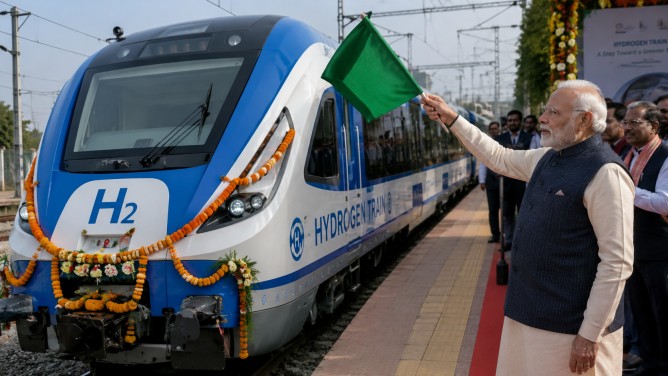
In a landmark move towards environmentally friendly rail travel, India has introduced its first hydrogen fuel cell-powered train. The inauguration took place in Jind, Haryana, with Prime Minister Narendra Modi officiating the launch, signaling a significant advancement in the nation’s commitment to green energy solutions.
Central to this innovative project is a comprehensive system that includes the production of hydrogen, a dedicated refuelling station, and a locomotive powered by fuel cells. The hydrogen is generated on-site through an electrolyzer, then compressed, stored, and dispensed safely into the train at the newly established refuelling station. This station boasts high-pressure compressors and hydrogen dispensers, all managed by an automated platform that ensures safety and efficiency during the refuelling process.
Officials underscored the importance of this venture, noting that it reflects India’s burgeoning expertise in creating indigenous hydrogen infrastructure. This initiative aligns with the objectives of the National Green Hydrogen Mission, positioning India as a leader in sustainable energy technology. Plans are underway to expand similar hydrogen refuelling systems to heritage railway lines, such as the Darjeeling Himalayan Railway, Kalka-Shimla Railway, and Nilgiri Mountain Railway, broadening the impact of this green innovation.
Hydrogen fuel cell trains operate by generating electricity through the chemical reaction between hydrogen and oxygen, with the only emission being water vapor. This technology provides a cleaner alternative to traditional diesel engines and is viewed as a crucial element in the strategy to cut carbon emissions within the transportation sector.