
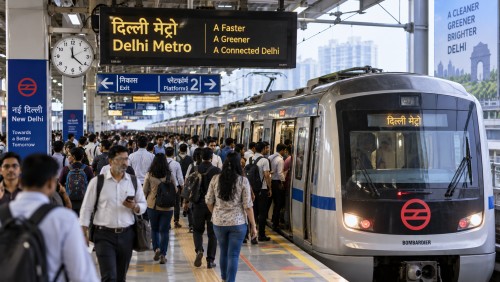
The Delhi Metro emerged as a crucial lifeline for commuters on September 17, accommodating a record-breaking 8.24 million passengers in a single day. This unprecedented surge in ridership occurred amidst a strike by private agency drivers associated with the Delhi Transport Corporation (DTC), which left thousands of buses off the roads and forced residents to seek alternative public transport options.
In response to the increased demand, the Delhi Metro Rail Corporation (DMRC) implemented measures to enhance service capacity. The organization added 20 extra train trips and deployed eight additional trains, particularly during peak hours, to manage the influx of passengers effectively. These adjustments underscored the Metro’s vital role in sustaining the city’s commuting needs during public transport disruptions.
The strike by DTC-affiliated drivers, now in its fourth day, significantly disrupted the daily commutes of countless Delhi-NCR residents, highlighting the dependency on the Metro system. The absence of regular bus services increased the burden on the Metro, pushing it to its operational limits and demonstrating its capacity to adapt to sudden increases in passenger numbers.
To cope with the heightened activity, the DMRC, along with the Central Industrial Security Force (CISF), intensified efforts to maintain passenger safety and streamline movement within stations. Their coordinated actions ensured that the increased footfall did not compromise the security and efficiency of the Metro operation.
This record-setting day for the Delhi Metro not only showcased its importance in the urban transport network but also reflected the challenges posed by disruptions in other public transport services. As the strike continues, the Metro remains a critical option for commuters navigating the city’s transportation landscape.