
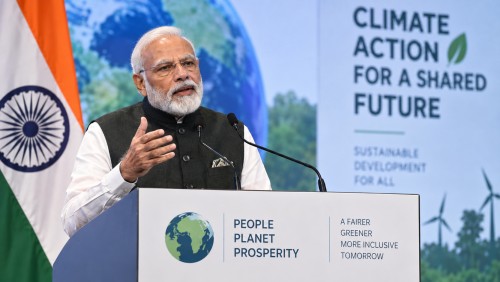
India’s stride towards sustainable development is gaining momentum as the country underscores its commitment to renewable energy, setting an example for developing nations in the global fight against climate change. At the International Conference on “The Future of Environment and Climate Dynamics” held in New Delhi, Prime Minister Narendra Modi emphasized India’s achievement in fulfilling its Paris Agreement climate commitments ahead of schedule, highlighting the country’s advancement in non-fossil fuel capacity and solar energy.
Prime Minister Modi addressed the misconception that developing countries are the main culprits behind global carbon emissions. He pointed out that India’s per capita carbon emissions are less than half the global average, demonstrating the nation’s significant efforts in minimizing its carbon footprint. This statement arrives amidst mounting international scrutiny on emissions, placing India in a favorable light as a leader among developing countries in environmental responsibility.
The two-day conference, organized by the National Green Tribunal on September 19 and 20, serves as a platform for judges, government officials, environmental experts, and legal representatives from India and abroad to collaborate on pressing environmental challenges. Key topics include policy implementation gaps, environmental justice, and institutional cooperation. Through four technical sessions, the conference aims to forge effective strategies for tackling future climate challenges.
India’s focus on renewable energy is not only a testament to its dedication to global environmental standards but also signifies a broader shift towards sustainable practices that other developing nations might emulate. The country’s progress in renewable energy, particularly in solar energy growth, underlines its potential role in the global transition to greener energy solutions.
As the conference progresses, it is expected to pave the way for enhanced international cooperation and innovative approaches to climate dynamics. By sharing insights and fostering dialogue among diverse stakeholders, the event aims to inspire actionable solutions that address both regional and global environmental issues.