
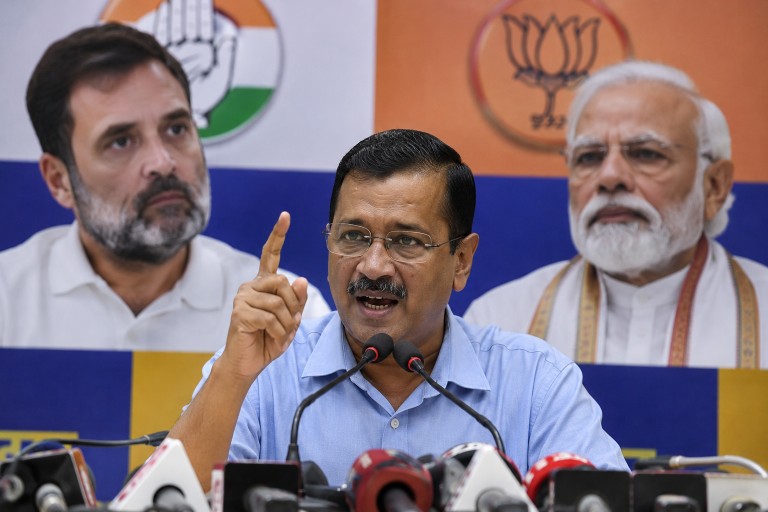
Tensions have escalated among Indian opposition parties as the Aam Aadmi Party (AAP) accuses both the Congress and the Bharatiya Janata Party (BJP) of collaborating behind the scenes. This accusation follows Congress leader Rahul Gandhi’s protest near the Prime Minister’s residence concerning the NEET examination controversy. AAP has alleged that this protest, purportedly allowed by the government, was strategically used to distract from the ongoing student-led movement demanding accountability for the NEET paper leak.
AAP Member of Parliament Sanjay Singh expressed concerns that the protest diluted the impact of the broader public campaign advocating for students’ rights. Further criticism came from Atishi, the Leader of Opposition in the Delhi Assembly, who questioned the government’s inconsistent handling of protests. She pointed out that while student activists faced restrictions and police action during their demonstrations near Parliament, Rahul Gandhi’s protest near the Prime Minister’s residence was not only permitted but also elicited a swift response from government officials.
The situation intensified when Union Minister Jitendra Singh engaged with Rahul Gandhi at the protest site, signaling the government’s readiness to discuss NEET-related issues in Parliament. Despite this, the protest concluded with the detention of Rahul Gandhi and several Congress Members of Parliament by the police, sparking further debate on the unequal treatment of protests.
This series of events underscores the growing friction among opposition parties, with AAP accusing Congress of inadvertently aiding the BJP by diverting attention from the student movement. The party’s criticism highlights concerns over perceived preferential treatment and questions the intentions behind the Congress’s actions, suggesting a potential weakening of the collective opposition front.