
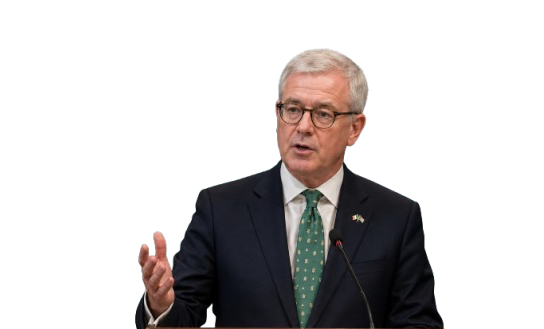
The European Union has underscored the significance of its strategic partnership with India, emphasizing enhanced collaboration in areas such as trade, technology, security, and connectivity. This partnership is set against the backdrop of ongoing efforts to finalize a landmark Free Trade Agreement (FTA) by the end of the year. As Ireland assumes the presidency of the Council of the European Union, Irish Ambassador Kevin Kelly highlighted the relationship’s breadth, extending well beyond trade to include technology, climate action, maritime security, research, resilient supply chains, and digital cooperation.
Ambassador Kelly noted that the EU and India are working to strengthen their ties in order to tackle common global challenges and to foster sustainable economic growth. The completion of negotiations for the proposed India-EU Free Trade Agreement marks a significant milestone, with formal signing anticipated by December and implementation potentially set for early next year. Alongside trade, the partnership encompasses critical sectors such as defense, security, and emerging technologies, reflecting the evolving global economic and geopolitical landscape.
The EU’s commitment to this strategic relationship with India is echoed by EU Ambassador Herve Delphin, who remarked on the necessity for both Europe and India to adapt to a shifting global environment. He stressed the pursuit of greater strategic autonomy while maintaining robust partnerships, as a means to navigate these changes. Delphin further emphasized the importance of safeguarding freedom of navigation and securing global trade routes, advocating for intensified India-EU cooperation in maritime security and regional stability.
This enhanced collaboration between India and the EU comes at a critical time, as both parties seek to bolster their strategic autonomy amid a rapidly changing international order. By focusing on shared interests in economic development, technological advancement, and security, the partnership aims to address pressing global issues while promoting mutual growth. The anticipated Free Trade Agreement serves as a cornerstone of this relationship, promising to enhance economic ties and facilitate greater cooperation across a range of sectors.