
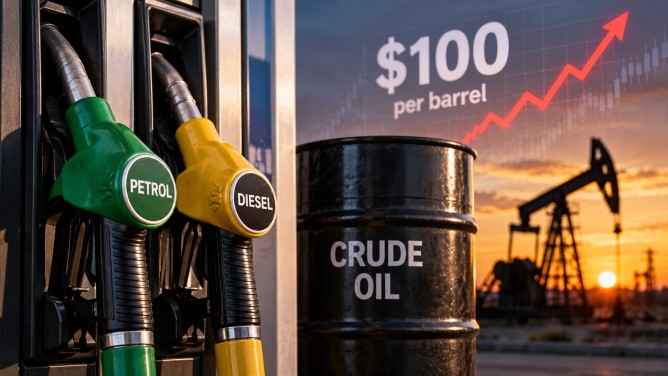
Fuel prices in major Indian cities are feeling the heat as crude oil import costs edge closer to the $100 per barrel mark. This surge is attributed to mounting geopolitical tensions and the instability of global oil markets. As a result, petrol and diesel prices in cities like Delhi, Mumbai, and Gurgaon have reached significant levels.
In Delhi, the price of petrol stands at ₹102.12 per litre, while diesel is at ₹95.20. Meanwhile, Mumbai sees petrol priced at ₹111.21 and diesel at ₹97.83. Gurgaon reports similar figures, with petrol at ₹102.97 and diesel at ₹95.64. In Bengaluru, residents are paying ₹110.82 per litre for petrol and ₹98.77 for diesel. Bhubaneswar shows petrol prices at ₹108.97 and diesel at ₹100.68, while Chandigarh maintains lower rates of ₹101.54 and ₹89.47, respectively. These variations across states are mainly due to differences in VAT, local taxes, and transportation costs.
The uptick in crude oil prices is linked to increased tensions in West Asia, alongside military confrontations involving the United States and Iran. Brent crude prices have also seen a rise, bringing India’s average crude import basket closer to its peak over the past three months. This scenario poses challenges for India, which depends on imports for more than 88% of its crude oil requirements, making the country particularly vulnerable to fluctuations in international oil prices.
Despite soaring global costs, state-owned oil marketing companies in India have kept retail petrol and diesel prices largely unchanged. These companies, responsible for operating over 90% of the country’s petrol stations, are under mounting pressure as they navigate the widening gap between international crude prices and stable domestic fuel prices.
In the backdrop of these developments, India saw a 7.9% rise in domestic petrol consumption in August, reaching 3.824 million tonnes. The stability of domestic prices amidst rising global costs underscores the balancing act these companies must perform, as they strive to manage the impact on consumers while dealing with international market pressures.