
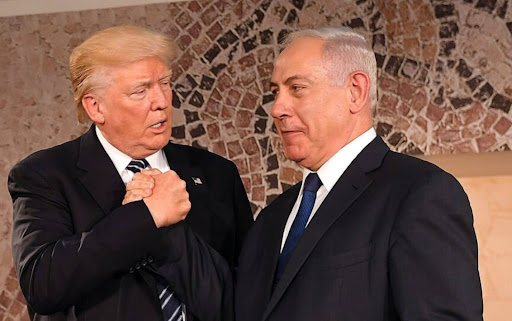
When Israeli Prime Minister Benjamin Netanyahu said “America is the leader” during the South Pars fallout, he was making a statement designed to be heard differently by different audiences. For Trump, it was validation and deference. For Gulf allies, it was reassurance that Israel operates within an American-led framework. For the Israeli domestic audience, it was a diplomatic formality that preserved the substance of Israeli independence. And for close observers, it was a reminder that language in alliance diplomacy often means precisely what the speaker needs it to mean in a given moment.
“America is the leader” is true in some important senses. The United States provides the strategic umbrella, the advanced intelligence, the diplomatic cover, and much of the international legitimacy that allows the joint campaign to function. Without American support, Israel’s ability to sustain a major military operation against Iran would be significantly constrained. In that structural sense, American leadership is real and consequential.
But the South Pars episode demonstrated what “America is the leader” does not mean: it does not mean that every significant Israeli military decision reflects American authorization. Netanyahu confirmed acting alone on the strike. Trump said he had warned against it. The strike happened. America led — in the sense of providing the framework and the support — but it did not control this particular decision. The gap between leadership and control is exactly what the South Pars incident illustrated.
Director of National Intelligence Tulsi Gabbard’s congressional testimony added another dimension: the two leaders have different objectives. A leader whose ally is pursuing different goals is not fully directing the campaign; it is managing a partnership that has its own internal tensions and momentum. The leadership language is real, but it describes a relationship in which the junior partner has significant autonomous agency.
Understanding what “America is the leader” actually means — and what it doesn’t — is important for accurately assessing the US-Israel campaign against Iran. It is a powerful alliance, genuinely coordinated in many respects, and American leadership is real. But it is not a relationship of command and control, and Netanyahu’s “America is the leader” statement should be understood as diplomatic reassurance rather than operational description.